
In honor of Morticia Addams’ birthday week, I wanted to take a closer look at a small but fascinating detail from her original 1960s television appearance. Carolyn Jones’ portrayal of Morticia is known for its elegance, restraint, and subtle darkness, and one accessory in particular quietly reflects that balance. In at least one still from the series, Morticia can be seen wearing what is widely recognized as a poison ring.



If you look closely at the image, the ring features a slightly raised setting, consistent with the traditional design of a hidden compartment beneath a hinged lid. The quality is not the best for the next photo showing the ring open. Even so, the detail is clear enough to appreciate the design choice, and it adds another layer to Morticia’s carefully curated aesthetic.
Publicity portrait of Carolyn Jones as Morticia Addams, circa 1960s. Photographer uncredited, likely produced for Filmways Television.
Poison rings are exactly what they sound like in theory, but their history is more nuanced than the name suggests. These rings are designed with a small, concealed compartment, typically hidden beneath a hinged top or decorative stone. While popular imagination often leans toward dramatic or dangerous uses, such as carrying poison for self-defense or intrigue, the reality is that many of these rings were used for far more practical and personal purposes. They could hold perfume, small keepsakes, medicinal powders, or even a lock of hair.
The origins of poison rings trace back to ancient Rome, around the 1st century BC. During this time, they were associated with both status and secrecy. Over the centuries, the design persisted and reappeared in different cultural contexts, most notably during the Victorian era in the 19th century. The Victorians, known for their sentimental jewelry and symbolic accessories, embraced compartment rings as a way to keep personal mementos close at hand. This historical continuity is part of what gives poison rings their lasting appeal. They exist at the intersection of beauty, function, and quiet mystery.
Because of this, the term “poison ring” can actually be a bit misleading. If you are searching for them today, you may also find them listed under names such as compartment rings or locket rings. These terms better reflect their everyday use, which was rarely as dramatic as the name implies. The intrigue, however, has remained, and that is part of what makes them so visually and culturally interesting.
In my own collection, I have two rings that are true poison rings, each with a functioning hidden compartment. Both follow the traditional design, with a small opening that can be lifted to reveal the interior space. I will be linking to where I found each of these pieces, as sourcing them can be part of the fun, especially when you are looking for something that feels both authentic and wearable.
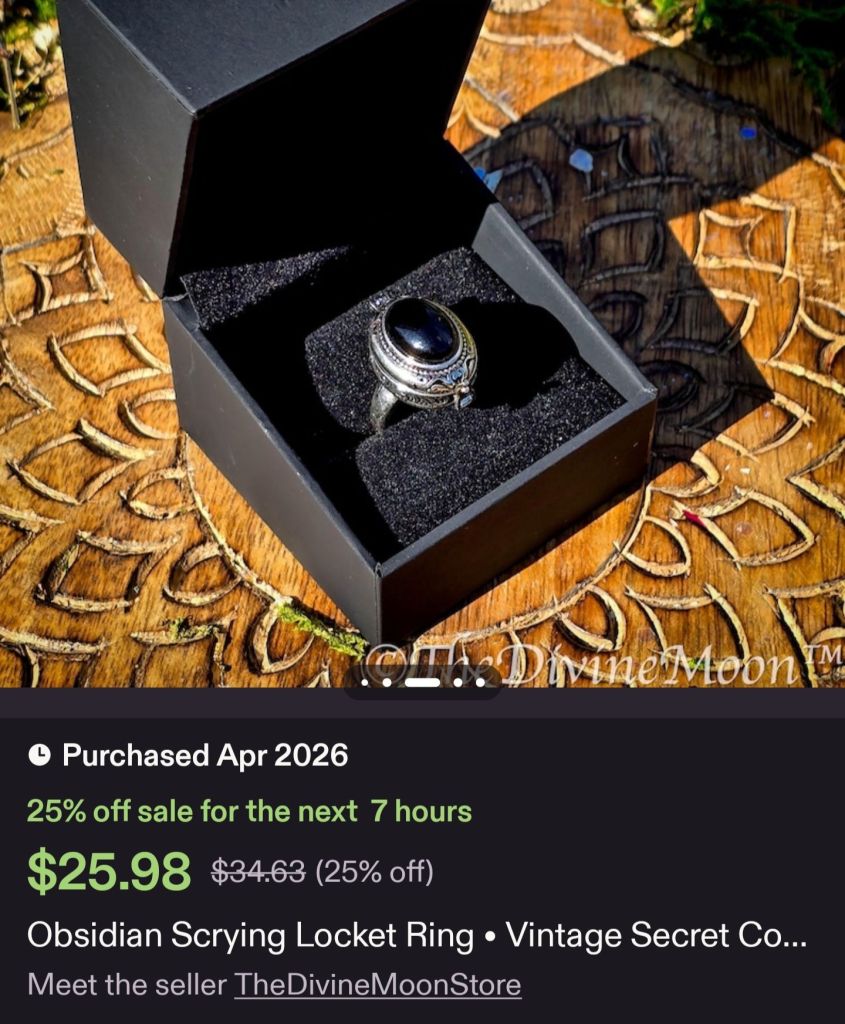
Budget friendly ring by The Divine Moon
Click Here for Ring Listing
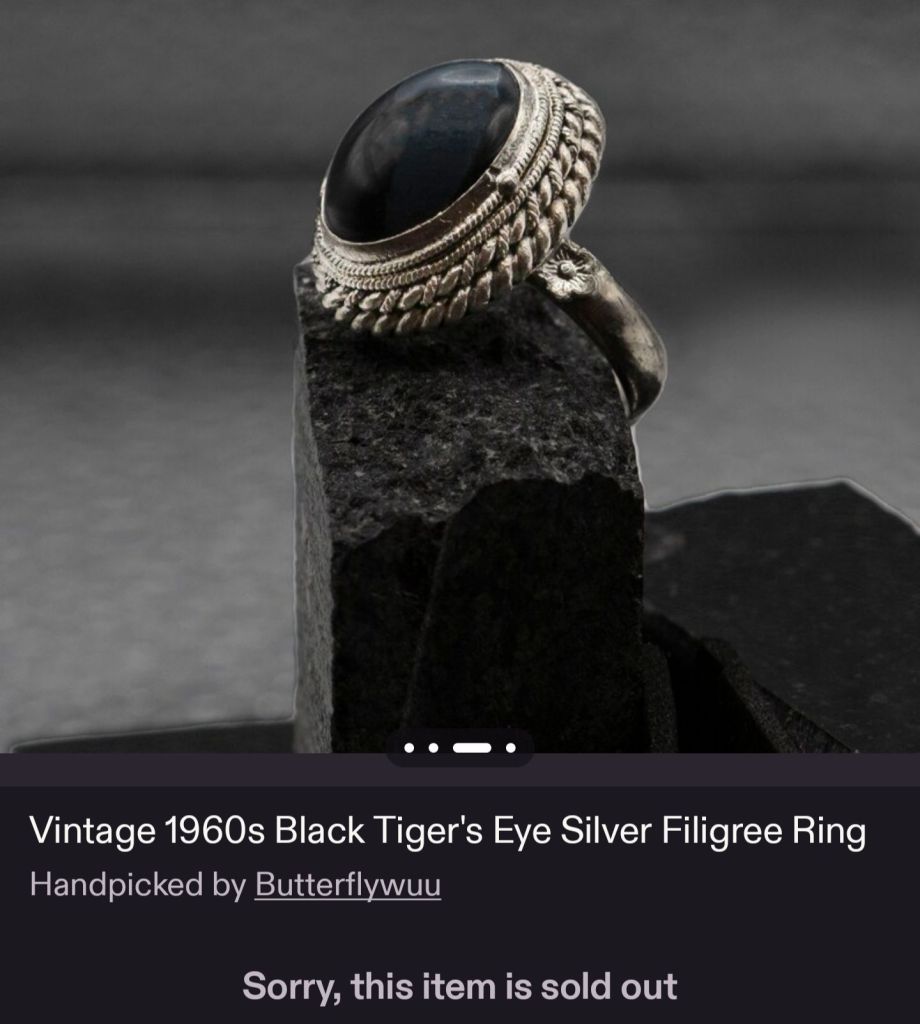
Most expensive ring is by Butterfly Wuu
They are also the one that provided the two jewelry boxes and bag you see in my video below.
Click Here for Ring Listing
Alongside these, I also own a third ring that captures a very similar aesthetic but does not contain a hidden compartment. At first glance, it fits seamlessly with the others, maintaining that same elevated, slightly mysterious look. However, in practice, it is by far the most convenient of the three.

Non-poison ring by Verdigris Jewelry
One of the more unexpected realities of wearing poison rings is how impractical they can be in everyday situations. Something as simple as washing your hands becomes a small but noticeable inconvenience. Water easily gets trapped inside the compartment, and if the ring is not removed beforehand, it will slowly drip out afterward. It is subtle, but noticeable enough that you will likely catch it happening at least once.
There is also something unintentionally amusing about it. The slow dripping can create the illusion that something is leaking from the ring itself, which, given the history and reputation of poison rings, can feel a little too on-theme. Whether it is dripping onto your hand or, in an unfortunate scenario, near a drink, it is the kind of detail that makes you quickly realize why these rings are more aesthetic than practical for daily wear.
That said, this balance between elegance and inconvenience is part of their charm. Poison rings are not just accessories; they are objects with history, intention, and a certain theatrical quality. They invite curiosity without demanding attention, much like Morticia Addams herself.
There is something fitting about highlighting them during her birthday week. Morticia’s style has always been about restraint, intention, and a quiet sense of power. A ring that holds a hidden compartment, whether used for something practical or purely symbolic, aligns perfectly with that energy. It is not about what is inside, but the idea that something could be.
Elegant, subtle, and just impractical enough to be memorable, poison rings continue to hold their place as one of the more intriguing pieces of jewelry history.